

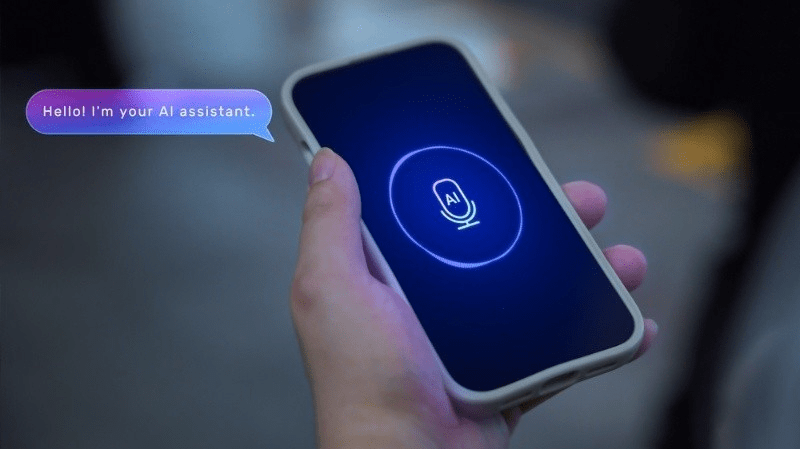
Reminders, schedules, quick answers, and AI personal assistants have been quietly sneaking into our daily lives, and they're just the tip of the iceberg. Forget the days when AI-driven productivity tools were exclusively for tech heads or businesses; in 2026, there are millions of individuals using them for work, study, private lives, and even shopping.
According to Statista, the global AI assistants market is expected to exceed $50 billion in the next few years, driven by growing use in business and by the public for conversational AI apps and smart AI systems. What previously felt like science fiction is now making people’s lives easier by automating tasks and saving time.
In this article, we will discuss how personal AI assistants are changing everyday tasks and lifestyles, the benefits they offer, their main uses, and the potential for future technology.
Personal AI assistants are the result of artificial intelligence systems that can help us perform tasks through conversation, voice, or automated actions. These systems use machine learning, conversational AI, and predictive algorithms to understand and predict our tasks.
These are mostly virtual assistants on mobile phones but also AI chatbot interfaces and enterprise/business productivity apps. Many smart AI tools can not only tell us things, organize our calendars, and help us with creative tasks, but also generate text, answer questions accurately, and even complete tasks within seconds.
Unlike more traditional applications, personal AI assistants learn our behaviors and habits from use, providing more intelligent answers and recommendations over time.
One reason for the rapid growth of AI task managers is convenience. In the 21st century, many people work, communicate, shop, and relax on a variety of devices, and AI personal assistants can simplify many tasks for us.
The other main reason is that most AI assistants are easily accessible. Today, it is no longer a novelty for us to interact with these assistants, but in many cases, the tools are either free or come as a fairly affordable subscription service. In business, conversational AI apps have been integrated into many processes, including client communication systems, customer service, website interfaces, and mobile applications.
Increased usage of smart AI is due to people working from home more often. A Deloitte study from 2025 found that more than 60% of office workers used some form of AI-powered productivity tool during their working week.
Today, AI has reached every corner and section of our minds and society. There is something for everything, and it severely helps in increased productivity, and here are the following:
Perhaps one of the greatest benefits of personal AI assistants is automation. These tools can immediately create reminders, manage and organize calendars, set up meetings, and prioritize tasks.
We can therefore carry on with the work without worrying about the small details of the day, as the AI will handle these monotonous tasks.
It's now possible for AI chatbot tools to draft emails for us and for conversational AI applications to create short summaries from long emails or meeting minutes, all of which saves valuable time.
Many businesses are now incorporating these intelligent AI digital assistants into customer service roles to answer questions instantly and remove long waiting times.
Information that might have involved opening dozens of tabs and applications and jumping back and forth between them can now be retrieved, analyzed, and collated in moments using AI assistants by simply asking them questions. This is particularly useful for research or student tasks, as well as in team collaboration and distance work.
Personal AI assistants can analyze a user's habits and preferences and provide recommendations for music, shopping, vacation destinations, and ways to further improve productivity.
Most modern applications, such as online stores, media providers, and smart assistants, are leveraging personalized AI systems.
AI assistants have entered many areas, including our daily work, such as reminding us and helping us shop. Here are more ways described on how AI assistants help us:
Virtual assistant technology is an essential tool for companies, enabling tasks such as project management, scheduling, and automating daily operations. Using these smart AI tools helps reduce employee workload and improve workflow. AI-powered team collaboration and communication features are particularly beneficial for remote workers.
Smart devices, from lighting and security to home appliances and music players, can be controlled using a smart AI personal assistant. The convenience and control that come with this have a large impact on why these devices have become so popular in recent years for smart homes.
Personal AI assistants for patients can be useful for arranging appointments, sending medication reminders, and gaining quicker access to medical information and resources. Some healthcare applications even use AI to quickly check symptoms and achieve faster diagnoses. An example can be seen on sites like drgptmd.com, which can provide quick answers.
AI tools have been used as virtual learning aids to assist students with tasks such as research and translation, to organize their notes, and even to manage their revision schedule. Conversational AI apps have also been found useful for quicker and faster responses to student inquiries.
Despite the great benefits, there are, of course, issues that need to be acknowledged.
Since personal AI assistants require access to our information to work, they must be reliable, as user lifestyle data is often shared and stored in smart AI systems. This does pose questions about how user information is kept safe. Companies are focusing heavily on enhancing security and privacy.
If users become too reliant on AI, they may reduce their capacity for independent thinking and problem-solving in certain situations.
Although these tools are useful, humans need to remember not to rely entirely on smart AI for every decision.
Although highly advanced, even AI personal assistants can sometimes provide incorrect or inappropriate information and are not completely foolproof. Therefore, it is always good to double-check facts, particularly when the information concerns health, finance, or a legal matter.
The personal AI assistant of the future will more likely be personalized and integrated further into our daily lives. AI systems are moving beyond simply executing tasks on command and will eventually take on more proactive roles.
Future smart assistants will be able to automate our entire lives, anticipating our every need and communicating with other AI tools to carry out a range of tasks without being explicitly instructed. Voice technology will continue to advance, with conversational AI becoming increasingly realistic and natural to the human ear.
On the business front, companies are investing more heavily in smart AI task management, which combines the ability of automated tools with proactive technology. This technology will be able to transform almost every sector, from healthcare to education to client interaction.
Personal AI assistants are not just handy tools but also digital companions that help individuals manage their lives better. They offer improved efficiency at work and home, better communication, and ease of use and convenience, which have changed our lifestyles and interactions with technology forever.
As conversational and smart AI continue to improve, their relevance in our lives will become increasingly prevalent. It is vital, however, to balance practicality with user privacy and the need for accuracy while maintaining sensible usage and avoiding over-reliance on these advanced smart systems.
From arranging appointments and scheduling to simply organizing a to-do list and communicating better with the people around us, personal AI assistants are making our lives that much easier and faster.
Some personal AI assistants offer offline functionality, such as setting alarms, launching apps, and organizing local files. However, sophisticated tasks such as instant web search, conversational support, or cloud-based AI management typically require an internet connection.
Modern AI systems have built-in security features like encryption and controls. Nevertheless, sensitive data should not be shared on these platforms without investigating the security and privacy policies of each tool used. Security risks could be significantly reduced by using a reliable virtual assistant service provider alongside other secure enterprise applications.
It is probable that AI assistants will handle all routine jobs. Most industries will likely experience increased productivity and efficiency from the use of AI assistants, freeing up humans for higher-level strategic thinking and problem-solving. Most researchers believe AI will restructure the workplace rather than eliminate all human roles.
This content was created by AI