

A smarter home sounds great in theory. Lights that respond to voice commands. Cameras that show who is at the door. A thermostat that adjusts itself without anyone touching it. Nice. Convenient. Maybe even a little cool.
But for a lot of people, the idea of building a smart home also feels messy. Too many apps. Too many brands. Too many products claiming they are “essential” when really they just make a lamp blink from a phone. Not exactly life-changing.
That is why it helps to keep things simple. A smart home does not need to look like a sci-fi movie set. It just needs to solve real problems. Maybe that means better lighting. Maybe it means stronger security. Maybe it means cutting down on small daily annoyances, like getting out of bed to turn off the hall light or wondering whether the front door is locked. Tiny things, sure. But those are usually the things people want fixed first.
That is where smart home devices earn their place. When chosen well, they make a home feel more comfortable, more efficient, and a little easier to manage without turning every room into a gadget showroom.
The biggest reason people start using smart products is not usually because they want to impress anyone. It is because they want more control over everyday routines. A smart bulb can change the mood of a room in seconds. A smart speaker can handle timers, reminders, and music without much effort. A smart plug can turn an ordinary appliance into something more flexible. These are not huge changes on paper, but together they start to shift how the home feels.
That is also why a good smart home setup does not begin with buying everything at once. It starts with one or two useful tools that fit real habits. The goal is not to collect gadgets. It is to make the house work better for the people living in it.
And honestly, that is the part a lot of marketing gets wrong. Smart home living is supposed to reduce friction, not add another layer of it.
This is where people usually make the smartest decision. Instead of asking, “What are the best smart gadgets right now?” It helps to ask, “What is annoying at home that could actually be improved?” That question tends to lead to better purchases.
If lights are often left on, smart lighting makes sense. If packages sit outside all day, a video doorbell may help. If energy bills feel high, a smart thermostat or smart plugs may be worth trying. If someone forgets to lock up at night, smart locks and door sensors can take some of that stress away.
This is one of the most useful home automation tips anyone can follow. Buy based on daily pain points, not hype. A simple fix that gets used every day is more valuable than a flashy product that ends up ignored after two weeks.
For beginners, smart lighting is one of the least intimidating ways to start. It is simple, practical, and easy to notice right away. Smart bulbs can be dimmed, scheduled, color-adjusted, or turned off from an app. Smart switches and smart plugs offer similar control without needing to replace every bulb in the room. Morning routines become easier. Bedtime becomes easier too. Even small things, like having the porch light turn on automatically at sunset, feel helpful faster than expected.
This part of a smart home setup also teaches an important lesson. Automation works best when it feels natural. The user should not have to think about it much. Good smart lighting just fits into the day and quietly does its job.
That is really the dream, right? Helpful without being needy.
Smart speakers often end up becoming the central control point for a home. They set reminders, answer quick questions, play music, control lights, and trigger routines. Not bad for something that mostly sits there until spoken to.
Smart displays take that a step further by adding a screen for video calls, recipes, weather, calendars, and camera feeds. That can be useful in kitchens, home offices, or entry areas where someone wants a little more information without grabbing a phone every time.
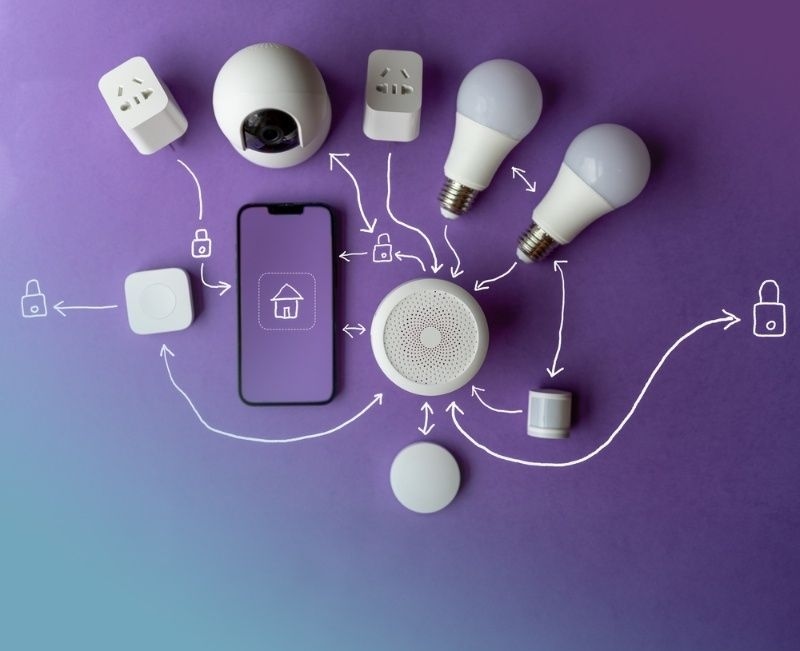
This is also where many people first connect multiple smart home devices into one system. Lights, plugs, thermostats, and cameras all become easier to manage when there is one clear hub or voice assistant tying them together.
The key, though, is not to overcomplicate it. Start with routines that actually matter. Good morning, lighting. Evening security check. Simple stuff.
Smart plugs are not the flashiest part of a connected home, but they are often one of the most useful. They let regular devices work on schedules or remote control without needing to be replaced.
A lamp can switch on before someone gets home. A fan can shut off automatically at night. A coffee maker, if used safely and appropriately, can be tied to a routine. Holiday lights become easier to manage. Even energy-heavy devices can be monitored more closely in some cases.
That is why they keep showing up on every beginner-friendly IoT devices list. They are affordable, flexible, and usually very easy to understand. No major learning curve. No dramatic setup. Just useful control over basic household things.
And honestly, that kind of low-drama tech tends to last the longest in real life.
Security is one of the strongest reasons people invest in connected products at all. A video doorbell, indoor camera, outdoor camera, motion sensor, smart lock, or window sensor can bring a surprising amount of peace of mind.
This is where smart home security becomes more than a buzz phrase. It becomes practical reassurance. Who is at the door? Was the package delivered? Did someone leave the garage open? Is the back door locked? These are small questions that can create a lot of low-level stress. Smart security tools help answer them faster.
That said, more security products do not automatically mean better security. Placement matters. Strong passwords matter too. So does keeping firmware updated. People sometimes forget that smart products still need basic digital hygiene. A camera is only helpful if it is configured properly and the account protecting it is not using some terrible password from 2014.
A smart thermostat is one of those devices people may not get excited about until they use one. Then they get it. It can learn routines, adjust temperatures based on time, reduce waste, and make the home more comfortable without constant manual changes. If someone always forgets to lower the air conditioning before leaving or wants the house cooler before bedtime, this type of automation can help a lot.
Among the best smart gadgets for long-term usefulness, thermostats rank pretty high because they deal with something people feel every day. Temperature affects mood, sleep, and energy use. When that part of the house is easier to manage, the benefit feels real, not gimmicky.
This is the part many buyers ignore until it is too late. A product may look perfect on its own, but if it does not work smoothly with the rest of the system, frustration shows up fast. One app for lights. Another for cameras. Another for locks. A fourth for the speaker. Suddenly the “smart” home feels weirdly scattered.
That is why compatibility should be part of every buying decision. Before adding new smart home devices, it helps to check whether they work with the preferred platform, voice assistant, or ecosystem already in use. Fewer apps usually means a smoother experience.
This is one of the most underrated home automation tips around. The device itself matters, but the way it fits into the whole setup matters more.
A better smart home usually grows slowly. That is not a bad thing. It gives people time to learn what they actually enjoy using and what they do not care about at all.
The first stage might be lights and a speaker. The next might be a thermostat or smart plugs. Later, maybe locks or cameras. That gradual approach keeps spending under control and prevents the house from turning into a test lab full of half-used tech.
It also helps people shape a system around their actual lifestyle instead of copying someone else’s IoT devices list. A parent, a renter, a frequent traveler, and someone working from home may all want very different things. There is no single perfect setup. Only a useful one.
That is really the whole point. A smart home should not feel like a complicated side hobby. It should feel like support. The lights respond when needed. The thermostat handles itself better. The front door is easier to monitor. The speaker helps with routines. The cameras provide reassurance without constant babysitting. That is when a connected home starts feeling worthwhile.
The best part is that it does not take dozens of devices to get there. A few carefully chosen smart home devices can already make daily life smoother, safer, and more comfortable. The trick is staying practical. Buy real routines. Keep the setup clean. Focus on what gets used. Because in the end, a smart home is not really about the technology. It is about making home life easier to live in.
Yes, many of them are. Smart plugs, bulbs, speakers, indoor cameras, and some doorbell options can work well in rental homes because they do not always require permanent changes or major installation.
Some functions may still work locally, but many smart features depend on internet access or cloud control. Basic device behavior can vary by brand, so it is worth checking this before buying.
Not on a fixed schedule. Some can last for years if they keep receiving updates and still work reliably. Replacement usually makes sense when security support ends, compatibility breaks, or the device stops performing well.
This content was created by AI